

How Beth Berke Built South Loop Loft Into a Cult Destination for Design Lovers
And a peek inside the rhythms of Beth’s European summer, where sourcing is part intuition, part diplomacy, and always a little bit magical.

I am VERY excited for this one.
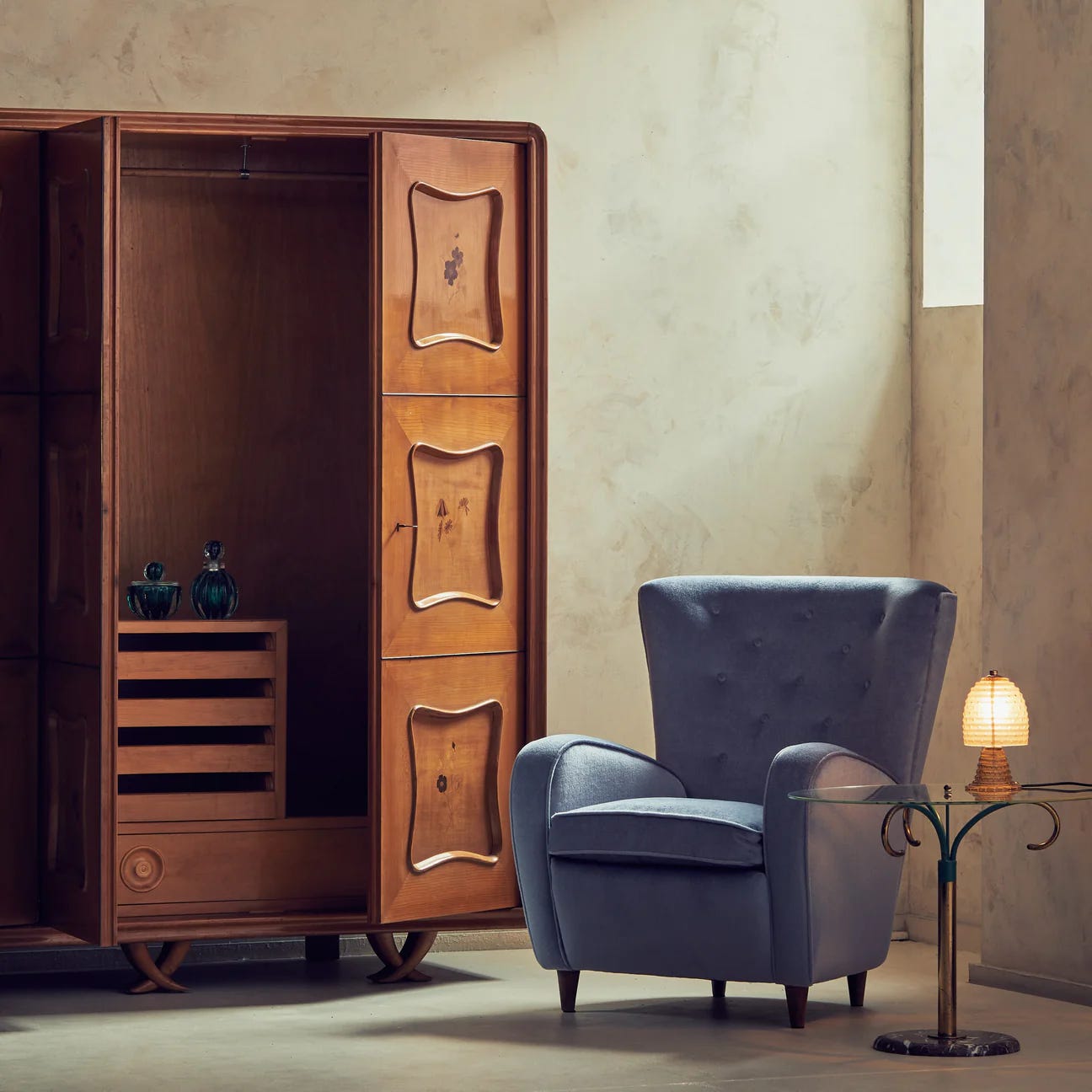
Our guest today (and the first interview on A Whimsical World!) has taste with a capital T. The kind of taste that can’t be taught. The kind that makes you pause mid-scroll and think: who found that? I’ve long admired Beth Berke, founder of South Loop Loft, one of my absolute favorite destinations for vintage and antique furniture and art. It’s the place AD100 designers flock to for the hero pieces, whether they are looking for perfectly patinated bronze, an 18th-century Italian table, or a biomorphic piece that somehow feels both Brutalist and romantic. Beth finds it. South Loop Loft just launched our Ribbon Collection, which is the BIGGEST honor, and a great excuse to get Beth talking about her process!
When I first met Beth, I had that thrilling, rare feeling: Oh, we speak the same language. A shared love of texture and materiality, of objects that carry weight (literal and emotional), a shared background in cultural anthropology (it was my undergrad major), and that persistent obsession with how people live and what they keep close.
I’ve followed Beth’s work for years (I am an avid customer, and my new home is filled with South Loop Loft treasures), but getting to speak with her directly gave me a deeper glimpse into the entire ecosystem she’s built. Beth is equal parts aesthetic vision, grassroots tenacity, and emotional intelligence. She is as interested in the people behind the pieces as she is in the objects themselves. And she approaches sourcing not as a transaction, but as a kind of artful diplomacy. Of course, there is extremely detailed planning (all that friction!), but there’s also a refusal to overschedule. A belief in the magic that can only happen when you leave space for it.
This conversation touches on so many things I care about deeply. Creative sustainability, building a business around intuition, European summers, and the thrill of the hunt. It’s for anyone who’s felt the pull of a flea market at sunrise, who’s ever wanted to follow a hunch down a dusty alleyway in Provence, or who’s trying to build something with meaning in a world obsessed with scale.
Beth’s story is a reminder that beauty and purpose can coexist and that what you choose to surround yourself with matters. Read on for her take on sourcing, European summers, and finding that just-right vintage sconce in a tucked-away garage in Piedmont.
You’re going to love her.

1. You began your career worlds away from vintage furniture—working in humanitarian aid in Afghanistan, then in child welfare back in the States. Later, you found yourself wandering Northern California estate sales and refinishing pieces by hand. Can you share the moment when all of that experience—your eye for care, your love of story, your background in craftsmanship—started to alchemize into what would become South Loop Loft? What pulled you toward design as your next chapter?
Before this chapter, I worked in Afghanistan and then in social work—listening, documenting, holding space for stories, and advocating for culturally attuned, human-centered solutions. That same impulse still guides my work today: to preserve beauty, honor origin, and approach design like the cultural anthropologist I once was. The throughline is always the same: how spaces shape safety, beauty, and belonging.
The alchemy moment came when I realized it wasn’t just about furniture—it was the thrill of building something from the ground up that was moving me. That same energy had driven our grassroots projects in Afghanistan. When interior designers from LA and my own city began reaching out—asking if I could source for their projects— That’s when I decided to keep building.
2. You travel the world to find pieces with soul. What does that process actually look like? Are you walking the souks of Marrakesh at sunrise? Digging through forgotten Italian villas? Paint us a little picture of the hunt.
There’s definitely some sunrise souk energy, yes—but the real magic happens in the in-between. You talk to the right person, ask the right question, and by mid-afternoon, you’re being dropped a pin to an unmarked warehouse outside Saint-Rémy.
This summer in the south of France, while curating our upcoming Ceramics Collection, someone at a flea market mentioned I should meet “the ceramics guy.” I reached out. He insisted on coffee first—he “wanted to know who I was.” Only after espresso in the town square and a stern vetting process did he show me photos. Eventually, I was invited to his warehouse. The collection was exceptional—rare pieces you simply can’t Google + names that haven’t hit collectors circles yet but will soon.
Every destination has its own rhythm. Some finds come from relationships I’ve built over years. Others appear because I make space for the unplanned. You have to read the room, ask the right questions, and always—always—leave space for the unexpected. If I followed a strict schedule, I’d miss the magic. I follow the feeling more than the map. That balance—between intuition and expertise—is what leads me to the one-of-a-kind, story-rich pieces designers come to us for.
3. Let’s talk summer. What does your ideal European summer sourcing trip look like—where are you going, what are you wearing, what’s tucked under your arm by the end of the day?
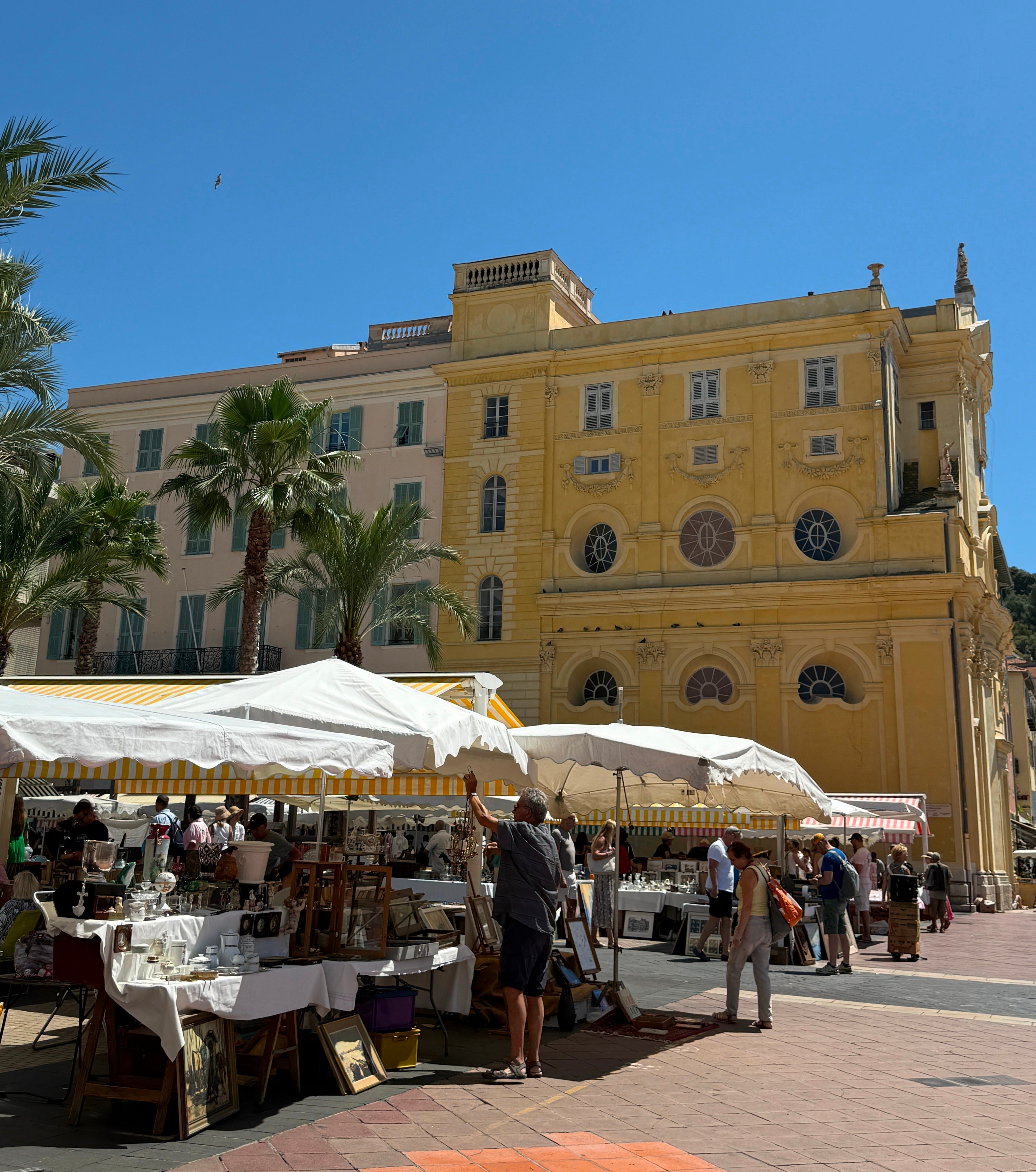
My favorite way to kick off summer is in Provence. Of course, I go for the design—but I dream about the Salade De Tomates all year.
It usually starts with a week of brocantes and regional fairs—early mornings sourcing at markets—then warehouse and studio visits, early evenings by the pool processing logistics and sending wire transfers during dinner.
After Provence, I head to the Côte d’Azur—Vallauris, Antibes, Nice, sometimes St. Tropez. It’s busy, yes, but the artistic energy is still alive. I stop into galleries, ateliers, and old warehouses. Over time, I’ve found quiet corners of the coast that feel raw, collectors who are historians, and places to stay that haven’t been overrun by the algorithm yet.
From there, I make my way to Italy—starting in Tuscany and then into Piedmont, sometimes stopping to decompress in Corsica along the way (...it’s the most magical place for quiet beaches and wild landscapes..)
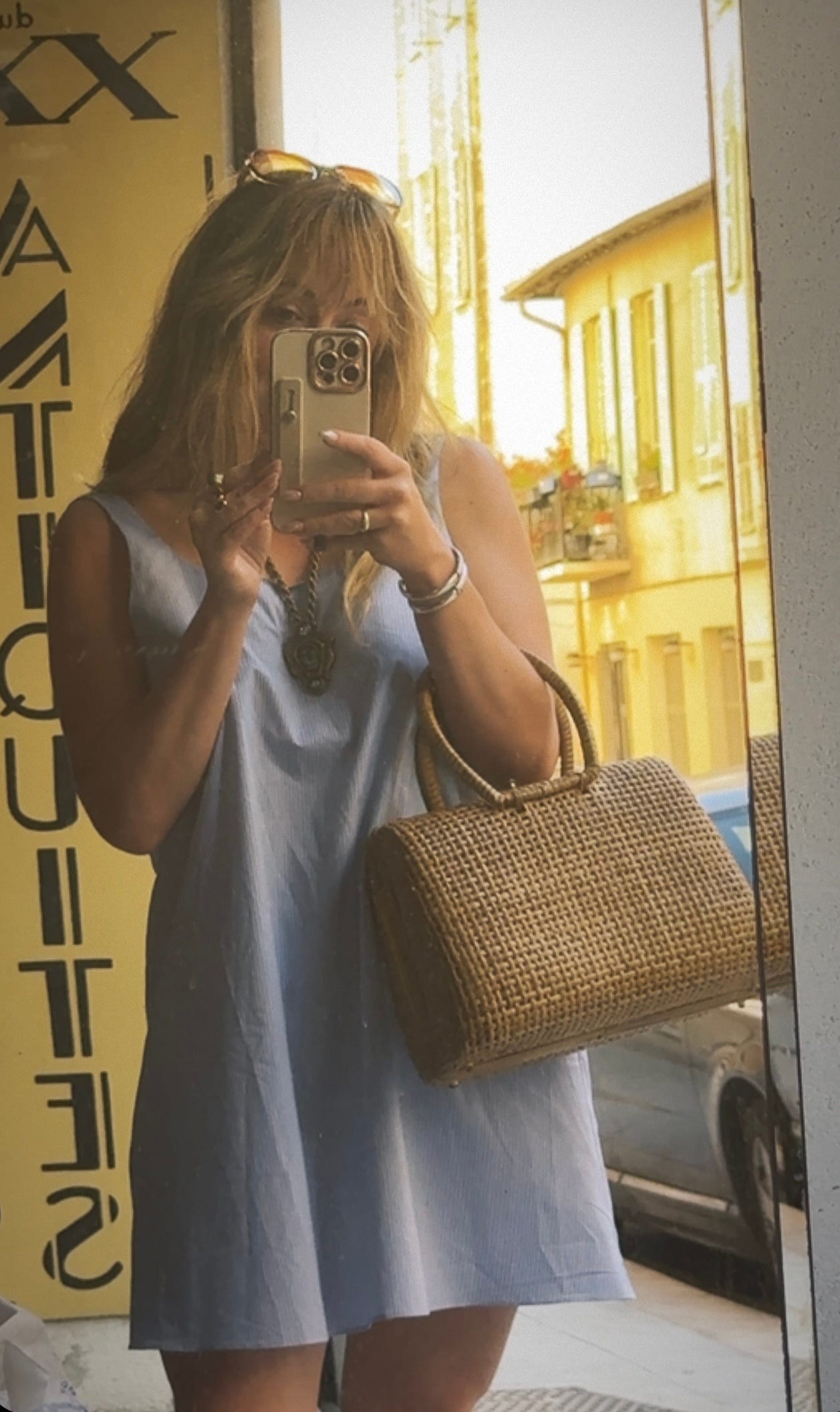
Despite my overpacking tendencies, I always seem to default to the same uniform: the ecru linen pants I picked up in Florence, old Céline sandals and a pair of Nina Ricci sunglasses. By day’s end, there’s some vintage jewelry tucked into a 1969 Paco Rabanne chainmail purse both found in a tucked-away shop off Via dei Serragli. In the backseat of the car, a pair of 1940s iron sconces for a New York designers project and a bottle of olive oil
4. Is there a city or region that always surprises you, where you never fail to uncover something that stops you in your tracks? What is it about that place that keeps calling you back?
The Piedmont region of Italy always exceeds my expectations. You think you’ve seen it all, and then you find yourself in a villa with a custom 1960s Murano chandelier still hanging in the stairwell, a prototype cabinet by an artisan who once crafted for Paolo Buffa… Or a pair of Gio Ponti sconces—with a certificate of authenticity—sitting in someone’s garage. (true story)
The rhythm in Piedmont is slower, more generous. There’s a design literacy in the culture that feels rare now. I always leave having learned something—from the objects but more often from the conversations. The more space I give myself to explore, the more it offers back. It’s a place that rewards curiosity and still holds a sense of discovery that feels…alive.
5. When you walk into a flea market or artisan studio, what do you look for first? Is it texture? Form? Energy? Tell us what draws you in and what makes you pass something by.
It always starts with feeling. Before I register provenance or material, I’m asking—does this piece make me feel something? I pass on anything that feels too commercial or mass-produced.
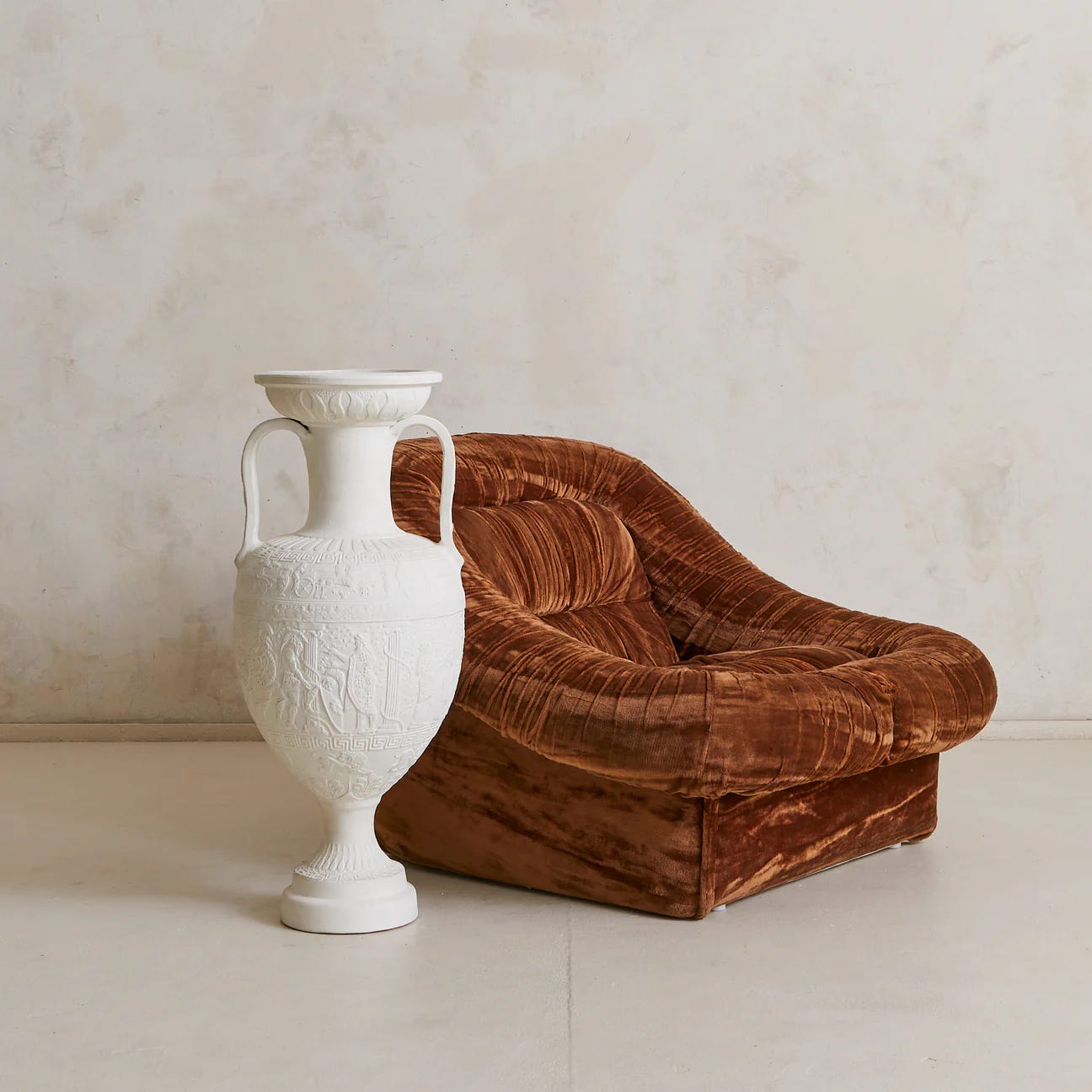
I’m often drawn to materially rich pieces—marble, bronze, artisan-cast iron, hand-blown glass, carved wood credenzas, amorphic sculptures with no artist name, ceramics.
Just a few weeks ago in Italy, I spotted a round iron form half-hidden beneath a moving blanket in a warehouse—iron birds just barely visible. The seller was hesitant to unbury it—Later that night, he texted me photos: a six-foot, custom-forged pendant with a thick, round pane of glass designed to rest inside the frame. Even before I saw it whole, I knew that piece was special. Definitely a custom commission designed specifically for the family. could already envision the kind of home—or person—it was meant for. That’s the compass.
6. There’s something romantic—and wildly complex—about sourcing pieces abroad. What’s the behind-the-scenes side most people don’t see?
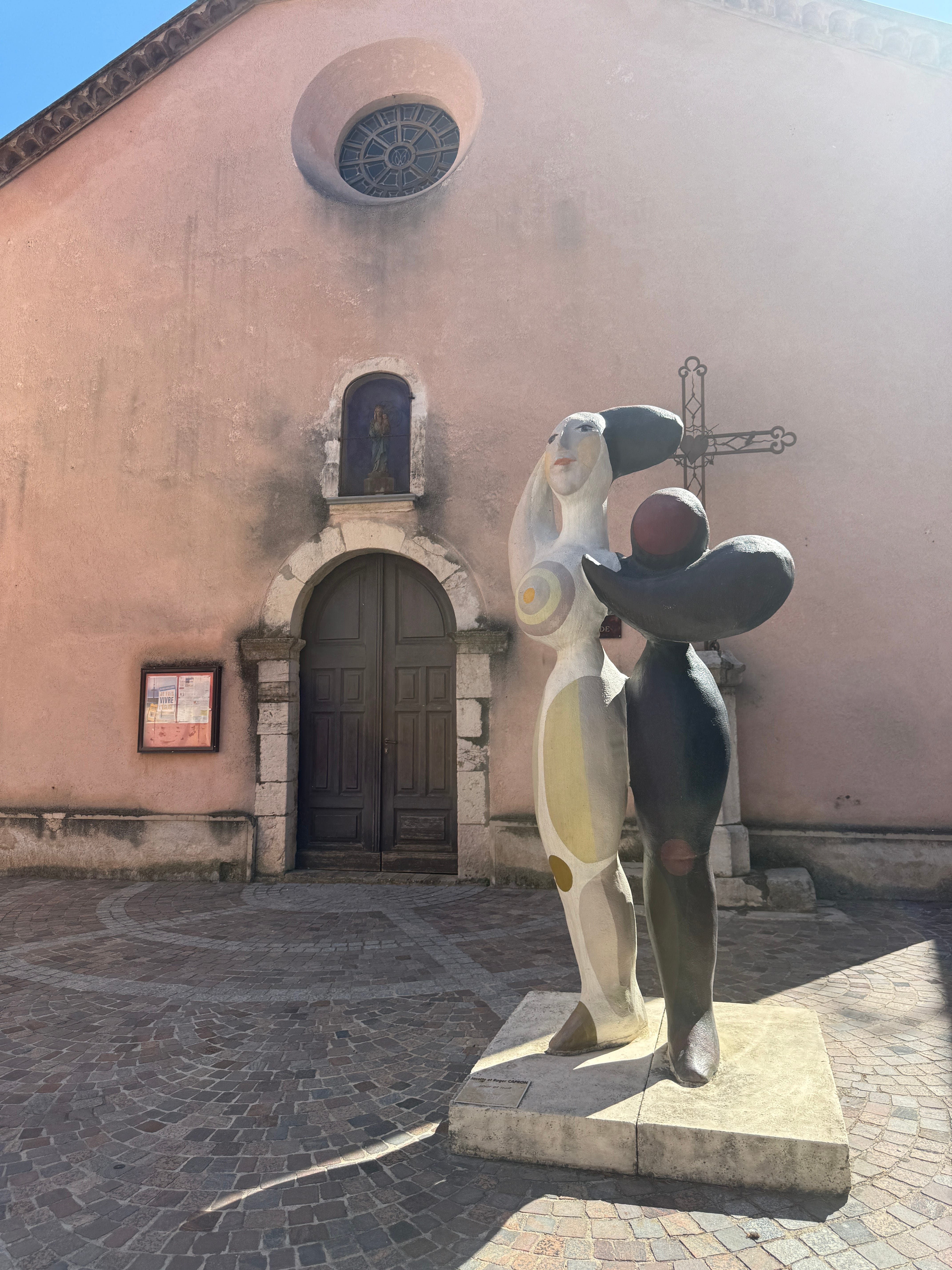
Speaking in four languages. Paperwork in four languages. Containers stuck at the border. My passport stolen in Paris. The time I had to learn manual transmission—immediately. Deciding in real time if I should purchase that museum quality seven-foot Murano mirror + how to make sure it is handled best for its intercontinental journey.
There’s road trip logistics, constant data entry and wire transfers over dinner. You learn to dance with the logistics. There’s a rhythm now—but it took years of trial and error.
Still, when that murano mirror arrives to our client's home and feels like it was made for the space… you forget the friction, it was worth it.
7. For creatives dreaming of building something similar—something soulful and personal—what’s your biggest piece of advice for staying grounded in your why as you scale?
Don’t force the voice. In a world obsessed with scale and polish, it’s tempting to rush growth.
Build something rooted in what moves you—what you’d protect at all costs. That’s what people feel, even if they can’t name it.
Sincerity cuts through the noise. Let your point of view come through honestly—growth will follow.
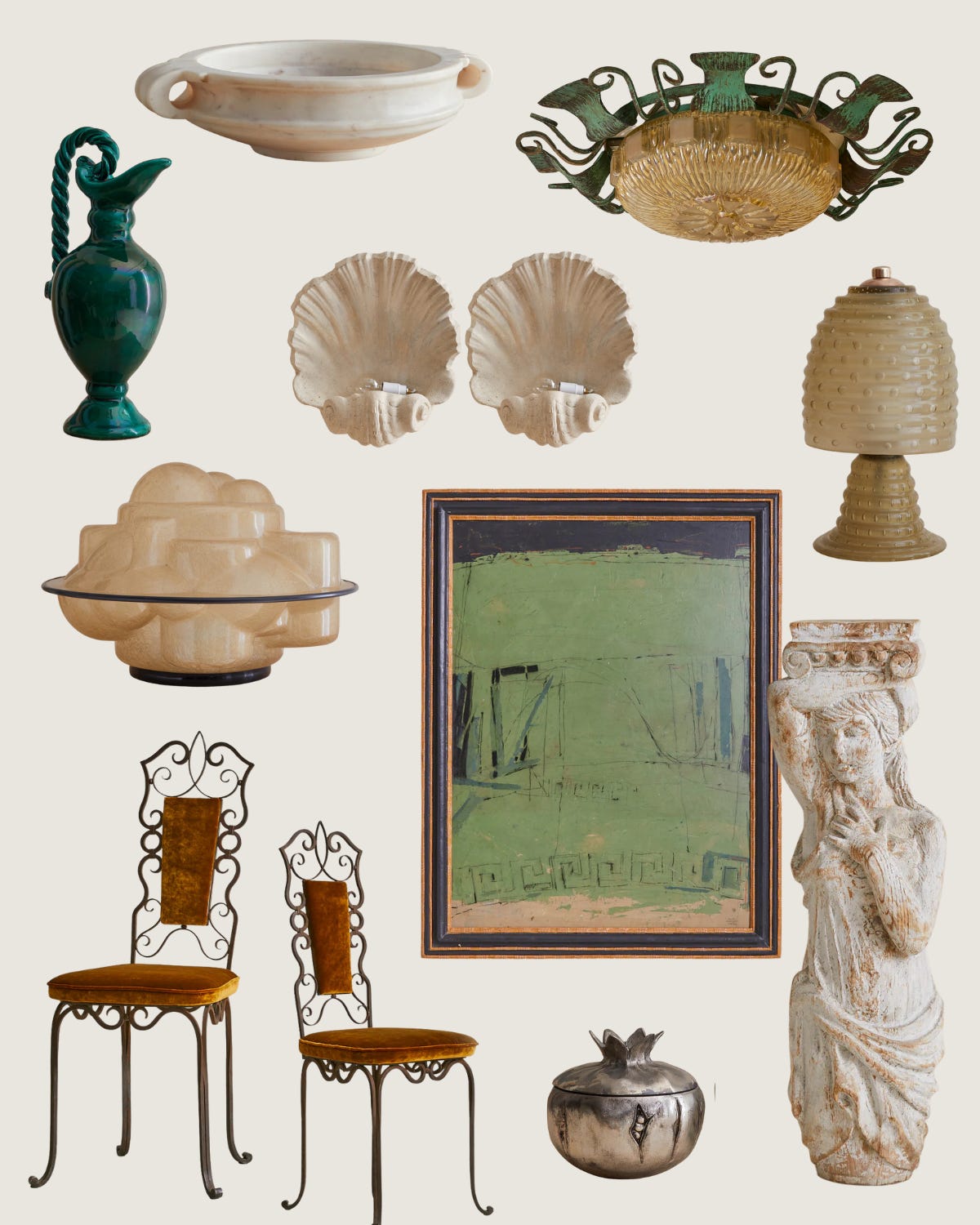
My South Loop Loft Picks:
And in LES news…
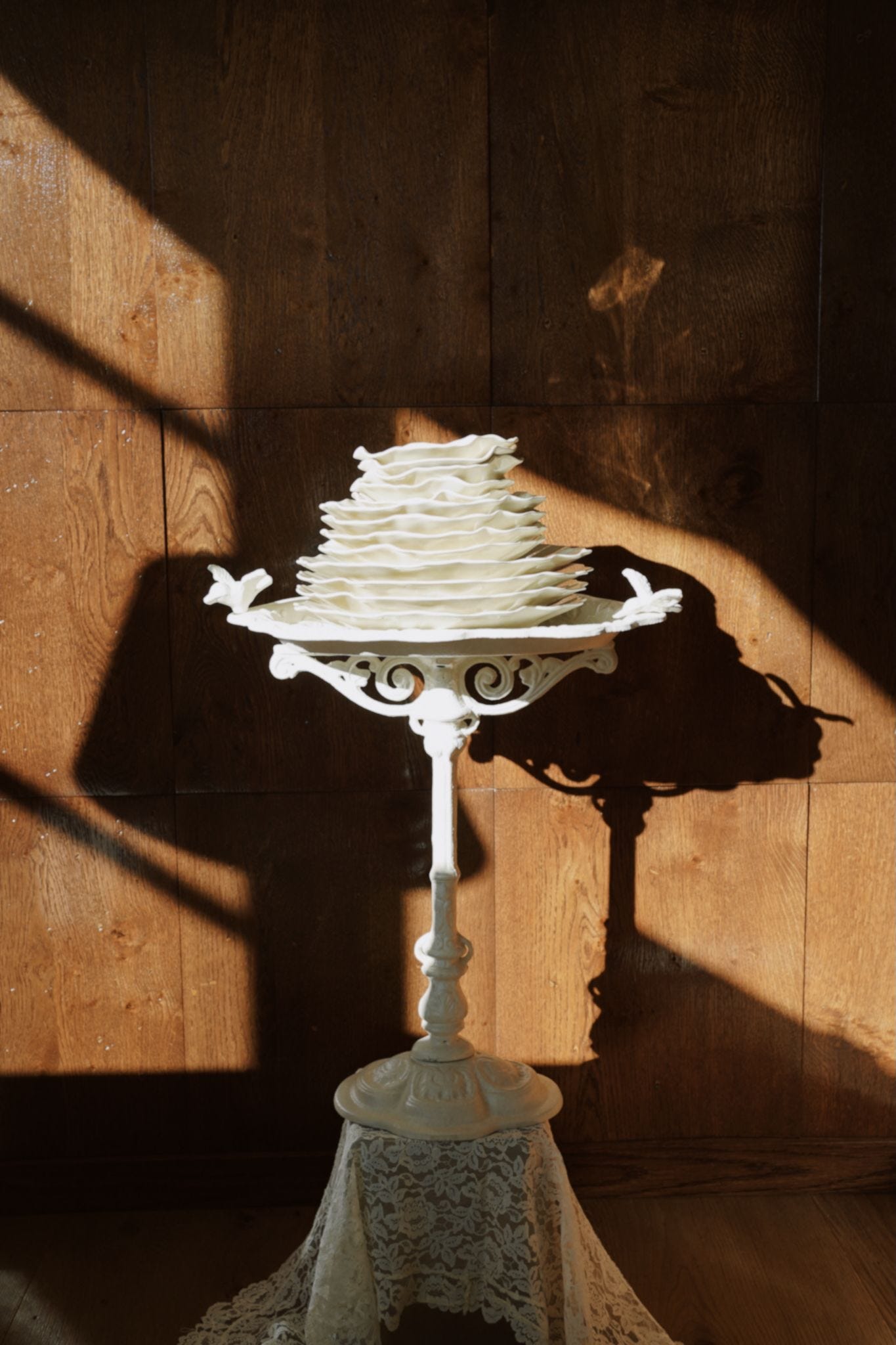
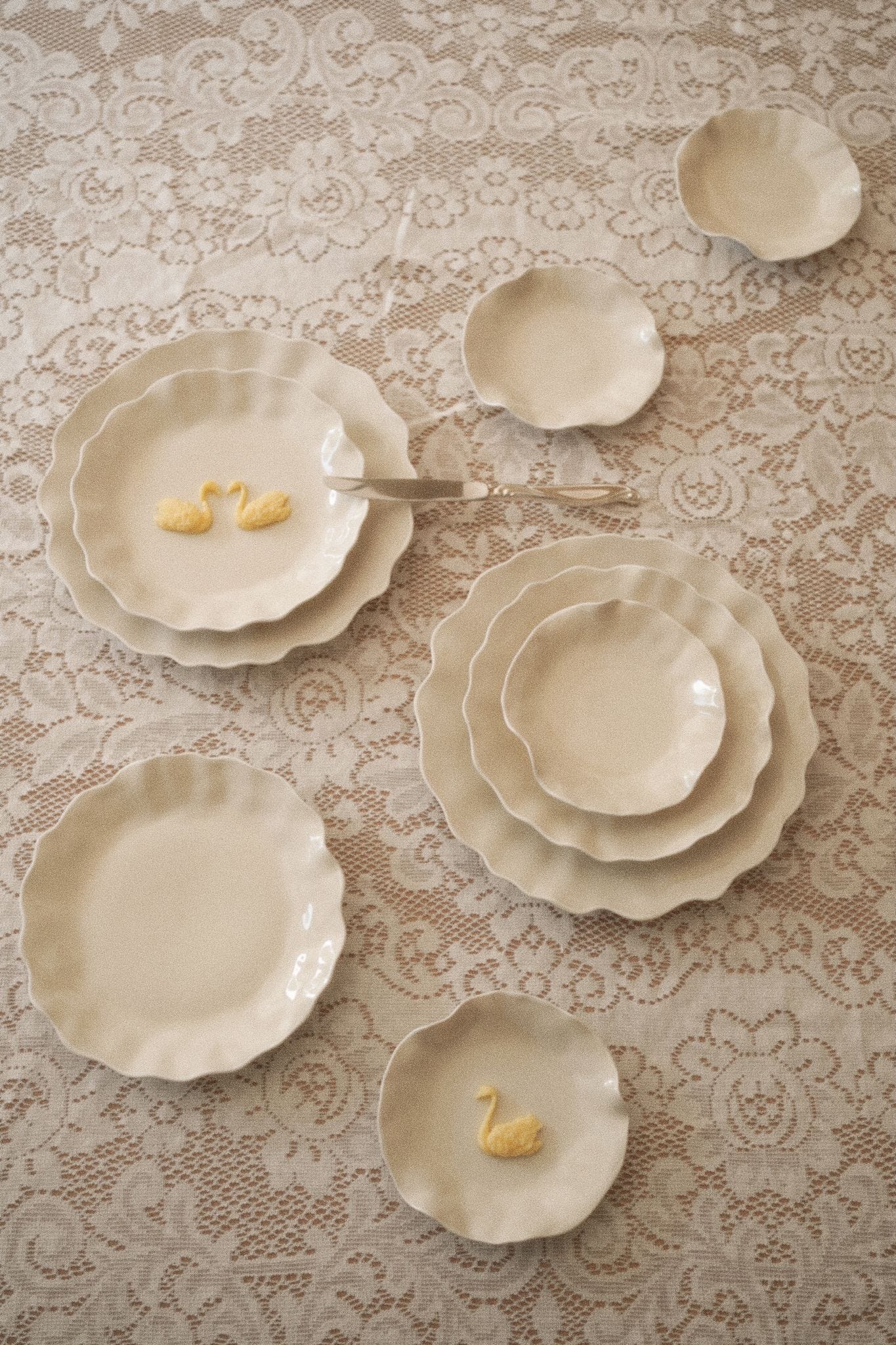
We launched a new color of our Ribbon Collection! A softer take on our signature style. The Swan colorway of our Ribbon Dinnerware collection features the same gently scalloped form and elevated durability, now finished with a hand-painted white rim for a more tonal, ethereal look. Designed to seamlessly transition from everyday rituals to celebratory dinners, The Swan Collection brings soft sculptural beauty to the table.
That’s all for today! This was a fun one. Should I do more interviews with my creative community? Let me know! If you want a more detailed look into my life as the founder of a creative-led brand, along with my deep dive sourcing guides, consider becoming a paid subscriber:
If you liked this, please share it with a friend and leave a comment! For more creativity, you can follow us on IG and explore years of art and design articles on the LES Journal
Keep Reading…
Eleven Personal and Actually Helpful Tools For Creativity in a World That Demands Constant Content

Today I'm opening up my creative toolbox. Sharing the practices and resources I turn to when I'm feeling stuck or uninspired. Before I get into that, I want to talk about a morning earlier this week that brought all of it into focus. A reminder of what it really feels like to run a creative-led brand in a world that expects constant output.
If Your Brand Still Uses the Word ‘Timeless,’ Read This

I recently came across an essay in FOR SCALE’s print magazine that boldly declared the word “timeless in design as meaningless nonsense, written by lazy marketers disconnected from the true nature of taste. It begins:
The Flattening of Design

My introduction to design began with swaths of color. My first apartment was the second floor of a late 19th-century Tudor in downtown Rochester. The living room was painted mustard yellow, the dining room was a rich ruby red, and the office and bedroom were cornflower blue. The kitchen? Amber, a black line, and then a deep green with teal tile and walnut cabinets (what?!). I was in college, and painting was out of the question; I didn't even consider it. Nor did I yearn for white walls. Of course, I would live in this kaleidoscope of color. I filled each vibrant room with hand-me-downs from my parents and vintage finds from a dusty local warehouse—a jumble of periods, textures, and tones. Each piece had character. There was not a sliver of beige in sight.
Absolutely loved this dispatch!