

From My Creative Library
Escaping the algorithmic trap: Why the best research happens offline, plus an invitation into my personal library

I’ve been thinking a lot about the difference between having an eye and using it. It’s one thing to recognize beauty when it’s placed in front of you; it’s another thing entirely to know what to do with it. To me, that’s the core of my creative practice: figuring out how to take the raw materials of life and turn them into something that is unmistakably mine.
Much of the time, that translation happens through research. In my world, research is a broad, living thing that takes many forms— meandering through a museum, factory visits in Portugal, studio visits in Brooklyn, time spent on the beach, combing through the sand, or reading a sci-fi novel. But today I am writing about the kind that happens quietly, alone, away from my computer and surrounded by my library.
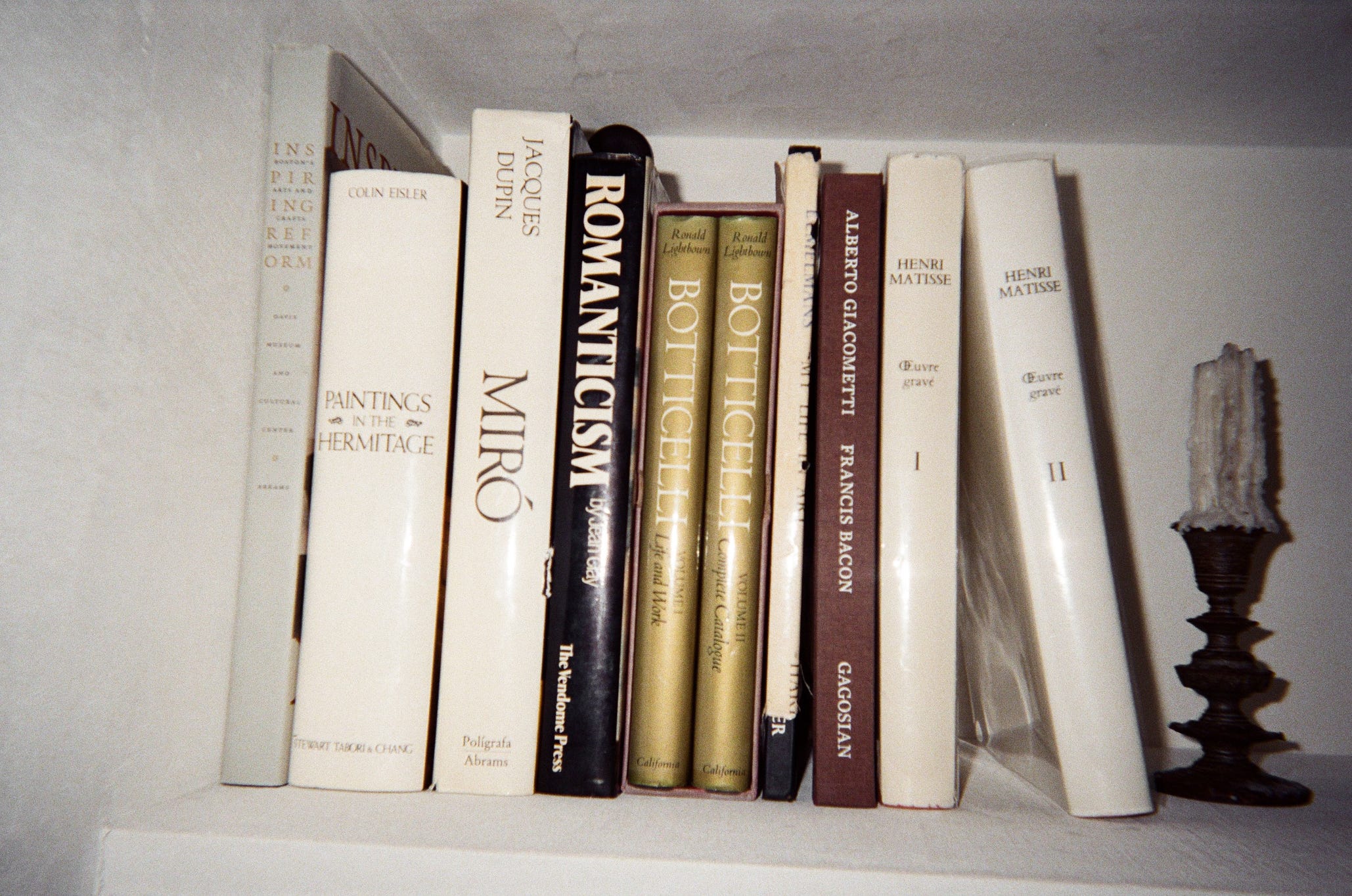
The older I get (and the deeper I sink into my creative practice), the more I feel a physical need to surround myself with books. Once relegated to neat rows on shelves, they’ve now migrated onto every available surface: monographs on Italian architecture, catalogues raisonnés of my favorite painters, and old magazines with crumbling covers that were never digitized. They aren’t there for “shelf decor.” They’ve become my creative engine.
I research online as well, but more and more that comes after. Part of it is a conscious desire to avoid the algorithmic trap, which is designed to feed us exactly what we (and everyone else) already like. It’s how we end up with all that “same-same,” and I am just as susceptible as everyone else. The lack of friction and resistance online leaves very little room for the kind of “wrong” turn that actually leads to original ideas.
I recently read Zoë Yasemin essay, “Your Research Practice Is Your Creative Identity,” which prompted me to write today’s post. In it, she makes the important distinction between collecting and thinking:
“Collecting is saving images because they are beautiful, because the mood is right, because they might be useful someday. It is passive. It lets the image speak without asking it any questions. A folder of thousands of saved images is evidence of a good eye, but it is not a research practice, it’s a database.”
Yasemin argues that research only happens when you start thinking:
“Research is when the act of looking starts producing ideas. You are making connections across unrelated fields, noticing patterns, and building a visual argument.”
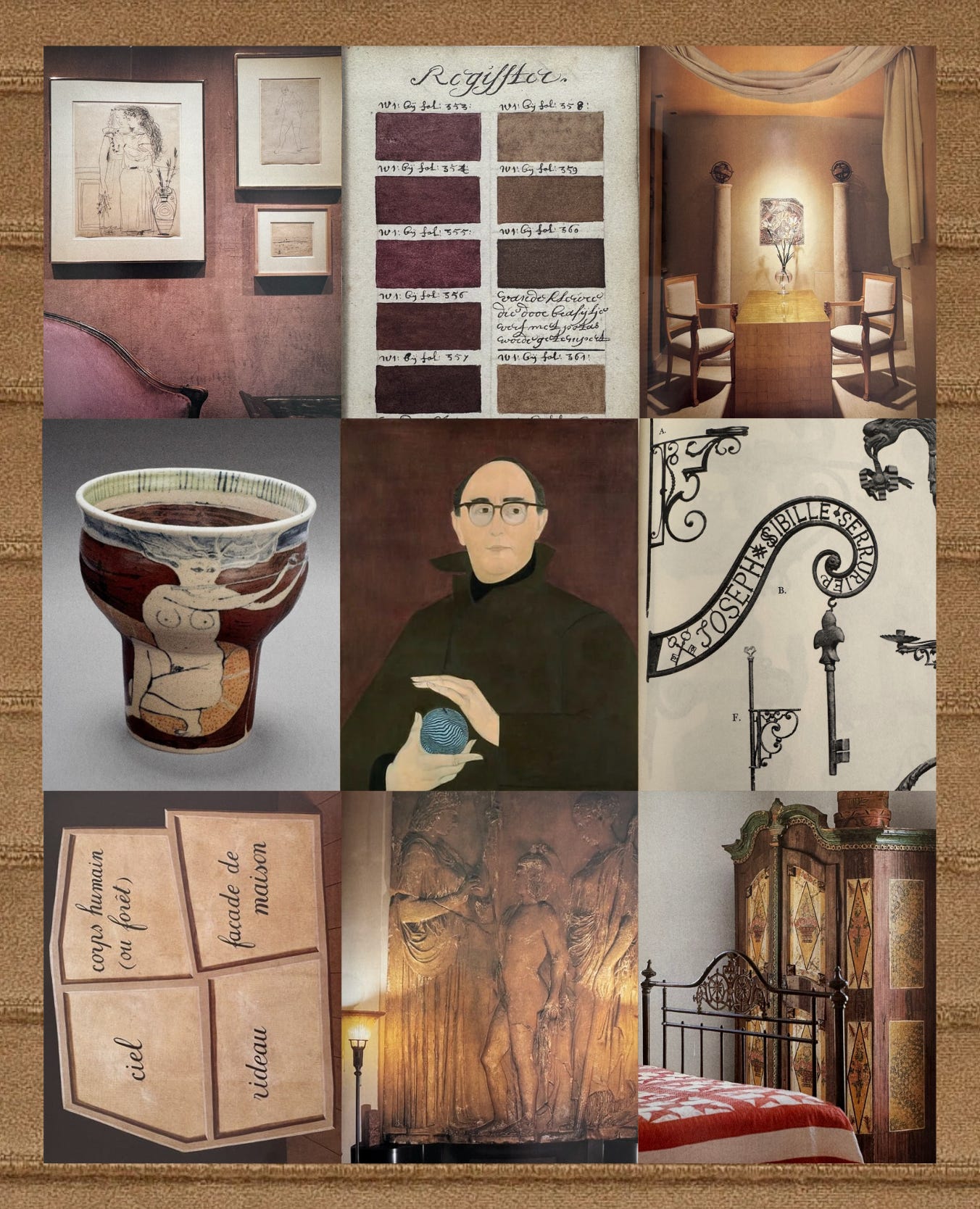
She goes on to say that in order to create a unique point of view, you have to find reference images outside your industry’s “shared visual language.” In other words, you have to get offline.
The “thinking” part works better with physical books and magazines. There is something about the tactile nature of a page that forces me to slow down—to take notes, to mark pages, to physically flip back and forth between an art monograph, a design catalog, and a book on jewelry. In those moments, it’s not an algorithm leading the way but my own curiosity.
Part of the reason I started this Substack was to chronicle my creative research with a bit more discipline and rigor. Many of the stories I share here are essentially me working out the “thinking” portion after stumbling upon a single, sticky image. It’s how I found my way into pieces like “What I Learned About Art and Marketing from Elsa Schiaparelli,” “What Alessi’s Tea and Coffee Piazzas Can Teach Us About Narrative Design,” or “The Joyful Absurdity of Attention with Saul Steinberg.”
But today, I’m launching a new series that focuses on the other half of that equation: the collection itself
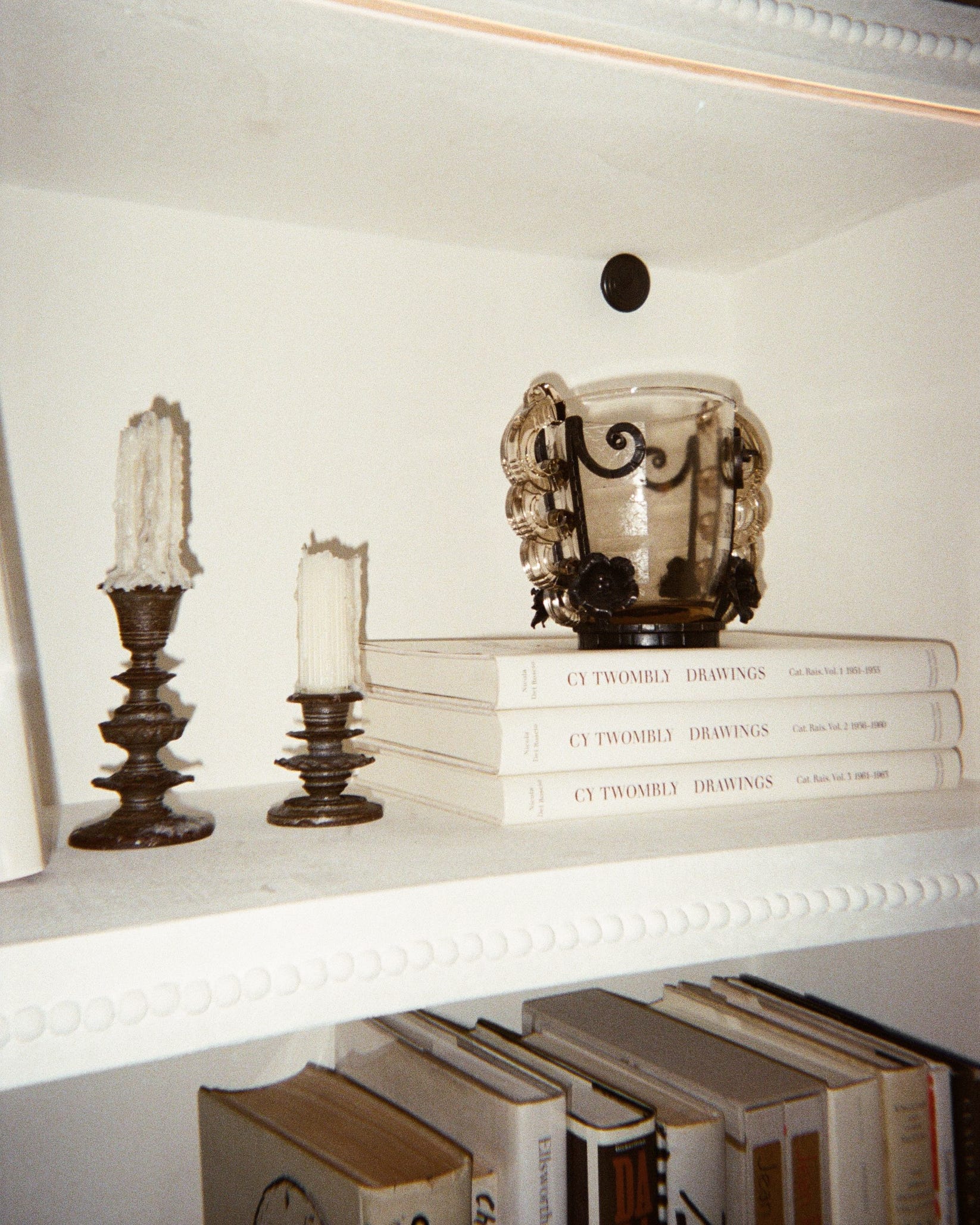
This series is a special invitation into my library, shared exclusively with my paid subscribers. It is a look at the raw materials currently fueling me—images on art, design, graphics, fashion, and beyond. It is a record of things that have made me stop, look, and wonder with little to no commentary. So you, dear reader, can think for yourself! Enjoy!
